leftchannel
headline

Monday, August 23, 2010

The Grand Opening of the New Youth & Children's Garden!


Thank you for your patience! And now that we’re ready for our grand entrance…will you join us for cake and lemonade on Tuesday, August 24, at 1pm in the Idea Garden (good choice!)?
The plants are struggling a bit—they were held over (and not very happy about the situation), but we already have a few changes in mind for next year. Bear with us and please—ask questions and make suggestions: we’d love to hear your thoughts on our changes.
Enjoy the pictures below…


And we started with a felt liner.


Rolling out the rubber liner.


Positioning the rubber liner.


Adding tiers of rock.


Shoveling rock around the plants. This is back-breaking work!


A horticulturist needs to plant in wet and dry conditions!


Is this a dead tree? No! It's the start of our Alphabet Trail: "A" is for Arbor!


And "B" is for Butterfly Garden, and "C" is for Checkerboard...

Come on in and see the rest of the Alphabet Trail, as well as Pixie Point and Pixie Passage. Or stop in for a game of Tic-Tac-Toe. Can you spot a fish or two in the pond? If you listen quietly you're sure to hear a frog shout as you approach. Join us for a piece of cake and let us know what you think of our new addition!

Wednesday, August 4, 2010

Documenting Your Garden or Creating Your Garden Dream Book

The gardening “season” is, sad to say, on the wane. And now is the perfect time to make some notes, take some pictures—do a bit of garden documentation. And who better to do the reporting than you? You witnessed the successes and a few devastating blows, and if you’re even a quarter as forgetful as I am, it’s best to have something to help you remember those events.

Where to start? Pick the type of record keeping that suits your personality best because then you are apt to keep up with it. We all start the garden season with good intentions and then, mirroring the gardening season, our interests tend to wane. If you start with a system that is simple and fun for you to use, you’re sure to make better use of it for the entire season.

If we were to take a poll right here and now, my guess would be that most gardeners have attempted at least once in their gardening lives to keep some sort of garden journal. Furthermore, I would dare to guess that most of us haven’t quite “kept up with it”. Me? Guilty as charged.

Brush those guilty feelings aside (better yet—just compost them) and let’s make fun the first goal of creating your Garden Dream Book. What is a dream book? Well, it’s a conglomeration of all sorts of materials that encapsulate your dream for your garden. It will include lots of data, but other things too. This will be a fantastic way to keep track of your garden and your plans from year to year, but it’s also a goal setting process that will help you to tackle and achieve some of those “dreams” you hope for in your future garden.

Think of any of these suggestions as a cafeteria plan—you can pick and choose what you’d like to select and leave any of the uninspiring behind.

Data to keep track of:

When—you sowed seed, it sprouted/germinated/emerged in the spring, you transplanted it, you moved it outside to harden off, you direct sowed seed, it blossomed/fruited, you harvested.

Where you—bought it, planted it.

What—it cost (and any guarantees that might have come with the plants), kind of fertilizers/pesticides were applied and to which plants.

How well— it fruited, you liked a particular variety (or not).

Did it have—issues with pests/diseases.

Weather—frost dates, general rainfall and temperatures as well as extremes (drenching rains, strong winds, and hailstorms.

General observations and daily activites.

Other Items to Add to the Mix

Empty seed packets, plant tags from plants you have purchased.

Pictures of everything: weather, animal damage, fantastic combinations, dreary or lackluster plantings, plants that might need dividing this coming spring (basically anything and everything).

Graphed out designs of planting beds—or drawn free hand, sketches and drawings of ideas and dreams, and general doodles.

Wish lists and plans: to include things that you will buy or make (wind chimes, plants, hammock, nifty wren houses, homemade copper trellis), hardscaping hopes (a new patio, a front porch addition, a garden pond or rock garden).

Detailed information: articles and picture clippings from magazines for details and inspiration, reference materials, hand-outs from lectures and how-to classes, book lists.

Wildlife Wows: notations on wildlife visits.

Inspirational thoughts, quotes, poems or stories.

Websites and blogs you like.

Recipes that you hope to try when the harvests start rolling in from your garden.

Pulling it all Together

My dad was an accountant by trade and he documented the “numbers’ of everything in his landscape during the entire year: 286 dandelions pulled, 127 onion plants planted, 492 scoops of snow shoveled, etc. And he just jotted these items down on a simple wall calendar; typically one that was a freebie from the local hardware store.

This kind of documentation can be very helpful—just a simple note (first frost/late frost, drenching rains, droughts, invasions of nefarious insects and such) can help you to trigger cause and effect scenarios on the plant life in your garden.
Once again, it’s best if you pick and choose what will be the most fun for you—‘cause then you are apt to stick with it.

Garden Journals: There are plenty of cute/lovely/sturdy notebooks to jot all kinds of notes into.
Consider starting your own blog—a great place to jot down data and creative ideas and thoughts.
Choose a nice sized sketch book for your drawings and doodles—it even makes you feel more creative and artistic to draw on “good” paper.

By all means, get a digital camera if you don’t already own one—pictures are simple to delete, download and print out.

A large bulletin board can be a good grouping site for many of the above materials. It’s in your face, prompting and inspiring you to keep making additions. Even a plastic box can corral lots of the above material until you have time (maybe in the wintery months?) to organize it all.

Perhaps the best solution—and not even high-tech, is to use a simple three-ring binder. Most of the above materials can have holes punched into them for easy addition to the book. Pocket dividers help to group things in sensible categories. Envelopes or plastic sleeves/sheet protectors will keep small things like seed packets, labels and receipts handy.

Whichever method or methods you decide to adopt, I can guarantee that whatever progress you make on garden documentation, it will keep you in smiles during a dull gray winter day as you reflect back through your gardening year. And it just might give you the extra push to register for a class to make that copper trellis you’ve always wanted… Hmmm, stay posted for details regarding this copper trellis class being offered at Cantigny in 2011!

Tuesday, July 20, 2010

Start Thinking Fall? Now?

Yep, the days are getting shorter. Boo-hoo! And it’s hard to imagine cooler days and evenings when our temperatures are soaring into the ninety degree range. But it’s time that you bust out the bin you store all your seeds in and take a peek and see what’s in there. If you’re giving me that empty look right now, I’ll take that to mean, “What seed bin? I was supposed to have a seed bin?”

Well, it’s that “inventory” of seeds that you just didn’t get to plant earlier in the spring, or maybe you just didn’t need all the seed and have a few remnants left in the package. But if you don’t have any kind of inventory—not to worry—you just might be able to pick up a few selections at the box stores or a local nursery—they don’t want to store any leftover seed and you’ll probably get them at a bargain price too. If you really have your heart set on a very particular variety you still have a bit of time to place an order online through your favorite seed catalog.

Bonus: most of the items that you will be starting for fall harvest can be sown directly outside (no need for a greenhouse or cold frame or any of that jazz) ‘cause soil and air temperatures are plenty warm enough right now.

Where will you put them? How are your current crops looking? Is there something out there that is looking a bit tragic? Have a heart and put it out of its misery—yank it out. Be it a water-logged area of annuals, an over-the-hill veggie planting, or an out of sorts container, use that prime real estate for a new and improved crop. Do a bit of cultivating in the area; add in a bit of compost if you’ve got it. Rake the soil nice and even and then you’re ready to sow.

You will need to be more diligent with your watering techniques at this time of year than in the cooler and wetter season of spring. When those new little seedlings poke out they are quite vulnerable to those blazing sun rays beating down on them. Be prepared to possibly even water twice a day during hot, sunny and windy conditions. Be gentle with the hose spray though, you don’t want to dash them right out of the ground with a forceful jet of water.

So, what can you plant? Think short term; since our days are getting shorter there is less time for some plants to mature (like eggplant, peppers and tomatoes). Look to varieties that will mature within about two to two and half months—around the end of September or mid-October at the latest, so 60-75 days.

Sow your bush beans, beets, cabbage, carrots, kale, Swiss chard, turnips right away and in a few weeks start sowing lettuce and lettuce mixes and well as spinach and radishes. Once those colorful and textural lettuce mixes start filling in they make the waning summer/fast approaching fall a bit easier to tolerate.

Monday, July 19, 2010

It's the American Idol of the Garden World


If you spin into the Idea Garden from our south entrance (just off the shady path from the First Division Museum), you’ll find a trio of circles bursting with blooms. Within those three circles are the entries for this year’s American Garden Award. They are bright with color and three of the four varieties often have a grouping of butterflies performing a tango atop them.

The American Garden Award competition is in its second year. Numerous plant nominees were submitted to the judges by various breeders. The AGA judges selected four varieties to compete to become this year’s national winner. And you, the gardening public, get to vote on who you think the winner should be. Eighteen sites nationwide, of which Cantigny is one, are displaying the four nominees. And just like the famed television program, there are several ways that your vote can be counted:

1. You can phone in your top favorite, or...
2. You can text in your top favorite, or…
3. You can vote on the website: www.americangardenaward.org or….
4. Lastly, unlike the television program, you can mail in a postcard.


Our spiffy mailbox, which contains the postcards,was hand painted by one of our horticulture volunteers, Gladys Johnston.


The four nominees this year are: Echinacea ‘Prairie Fire’, Ornamental Pepper Purple Flash, Rudbeckia ‘Denver Daisy’, and Zinna ‘Profusion Knee-High Red’. Please note that all the pictures within this blog were taken at Cantigny.

Instructional sign that also identifies each variety.


Echinacea 'Prairie Splendor'™ was Fleuroselect Gold Medal winner in 2007. And no wonder—at 24” it is shorter than most Echinacea, but blooms its little heart out from June through the first frost. The only entry in the group that is a perennial and blooms its first year from seed.

Echinacea purpurea 'Prairie Splendor'

As is typical for ornamental peppers, their fruit is fiery hot, but you’ll want to grow this exotic plant for its striking black leaves that have “flashes” of purple, green and white. Ornamental Pepper ‘Purple Flash’ looks great in container plantings as well as a bedding plant. While short of stature (10-13”) it packs quite a punch in the “looks” category and is drought tolerant as well.

Ornamental Pepper 'Purple Flash'

Rudbeckia hirta ‘Denver Daisy’ was selected by the city of Denver for their 150-year anniversary beautification project. This tall plant (18-20”) has large (4-6”) non-stop gold flowers with an inner concentric band of russet. You’ll get a lot of bang for your buck with this black-eyed susan annual plant.

Rudbeckia hirta 'Denver Daisy'


Zinnia ‘Profusion Knee High Red’ The Profusion series is well-known for its tolerance of heat and humidity, but ‘Red’ is a bit taller (16-24”) than its siblings. This red-blooming hybrid is nice as a cut flower and is drought tolerant too.


Zinnia hybrida 'Profusion Knee-High Red'

And the winner of the next American Garden Award is……to be announced in September. Don’t forget to vote for your favorite!

Monday, July 12, 2010

There's a New Tour in Town!


Over the years we have offered a variety of garden tours…morning tours with horticulture staff responsible for a particular area, volunteer docent tours, and the always popular evening tours with wine and light refreshments. Recently, we’ve added a different kind of tour—one that’s available to you whenever and wherever you may be… Over the Fourth of July weekend we added the Cantigny Park Audio Tour.

It’s a nifty interactive tour that can take the visitor a bit behind the scenes on various hot spots throughout gardens and around our Visitors Center and two museums. Signs are posted with a phone number to dial to connect to Cantigny’s Cell Audio Tour—then a “stop” number is provided to focus in on the area in front of you, when you’re at the park, or you can refer back to a tidbit of information from a remote location (like home) by dialing the same numbers.

Okay, how ‘bout an example…so, you’re out and about on our grounds and you spy a sign that asks an intriguing question—like, “Who is Cantigny’s oldest resident?“. Dial up the number: 630-315-2588 and press the stop number as directed on the sign (19) and presto-chango, you’ll be getting some interesting facts about that topic!


Did you know that Cantigny once had an airport for Colonel McCormick’s private airplane? Do you know what makes the Chicago Peace Rose unique to Cantigny? You can choose to stop and listen or….maybe you already know how to attract butterflies to your garden—well, yes you do if you’ve been following this blog at all….then you can simply by-pass that stop. If you were on human-guided tour you’d have to bide your time on a subject you’re already well versed in. And one of the coolest parts about this tour is that you can dial it up whenever you’re ready and interested.

There’s a new tour in town and it’s custom-made and personalized to your preferences. A tour with a different perspective: you pick/you choose. A sort of cafeteria plan of tours... Bon Appétit!

Tuesday, June 29, 2010

A Recipe to Entice Floating Tapestries to Your Garden Part 2

Today: Did you know that today is the anniversary of the Interstate Highway System’s birth? Yep, June 29, 1956, President Dwight Eisenhower signed a bill providing 33.5 million dollars for highway construction. It also happens to be the biggest public works program in history. Be it a bane or blessing to you—those are the facts. And what does that have to do with gardening? Well. Nothing actually—just thought it might be an interesting factoid to banter about at the dinner table tonight.


Attracting Floating Tapestries—Part 2


Greetings Earthling! Beautiful and a very important pollinator too!

Okay, so we covered providing a sunny, sheltered site with lots of host plants for the caterpillars and nectar-producing plants for the butterflies in our Part 1 post. What else do you need? The rest of this stuff is all bonus for our butterfly friends…

FACT—There are about 700 species found in North America and about 100 in Illinois.


"Do you like my hat? Butterfly not included." All of the pictures in this post (with the exception of Mr. Caterpillar) are compliments of Jim Frazier--one of Cantigny's Volunteer Photographers...Thanks Jim!

Ingredient number 5: provide a “Puddling” spot. What the heck is that you may ask? Well, butterflies need to access moisture by extracting it—but not from open water. You might have seen them gathering on a dirt or gravel road in a damp area where they are sipping up minerals and water. This is called puddling. So to mimic this you can use a shallow container or bury a bucket to the rim and fill with sand and gravel. You can then pour in various liquids depending on the time of the year. Water is fine at anytime of the year but, if you want to get really fancy you can add sweet drinks, or stale beer. Yumm-oh! One of their personal favorites is overripe fruit! Rotting bananas and grapes are especially attractive for early spring fliers as well as honey, molasses or syrup—these can be smeared on a rock or fence post. Maybe you’ve seen this in action at a butterfly conservatory, eh?


FACT: Most butterflies live 10-20 days. Some as short as 3-4, others such as overwintering Monarchs, can live 6 months.


Another plus to attract butterflies is to back off on your use of chemicals in your yard. Limited or no chemical use is ingredient number 6 and very important to our little friends. Use mulch instead of weed killer. Prune out a diseased branch instead of spraying. Swab soapy water on nefarious insects instead of using insecticides. Or, just have some tolerance for a bit of imperfection in your garden. The butterflies will smile in your honor. Also, if you have ever used Bt (bacillus thuringiensis) as a “safe” means to control caterpillars, don’t forget that butterflies in their larval stage are caterpillars too!

Swallowtail caterpillar on bronze fennel--photo compliments of Jack Bannister


FACT: Their proboscis (like a tongue) is like a double straw!


One more ingredient and you’re pretty well set—try to water at ground level (soaker hoses are helpful here). Sprinklers can wash eggs, pollen and caterpillars off of plants. It also limits the amount of time butterflies have to “get to” the flowers.


FACT: Butterflies “feet” or tarsi, have a sense of taste similar to a taste bud; when they come in contact with nectar, their proboscis uncoils.

Hawkmoth--sometimes people confuse this creature with a hummingbird--but he's much slower AND he's got antennae!


Combine all of your ingredients together. Add in a healthy dose of patience. Serves: Monarchs, Black and Tiger Swallowtails, Admirals, Viceroys, Morning Cloaks, Painted Ladies and Frittilaries. A very nice complementary addition to this recipe is a great butterfly identification book from your local library.

Monarch on Butterfly Bush


Enjoy with kids—yours or someone else’s. It’s a good way to get them interested in gardening period. Let them create and care for their own butterfly container garden. Raising caterpillars can be educational and fun too. The butterflies emerge from the chrysalis and can be released back into your own yard. See resources below.

www.monarchwatch.org
www.butterfliesandmoths.org
www.naba.org North American Butterfly Association
www.chias.org Peggy Notebaert Nature Museum, Chicago, IL

Monday, June 28, 2010

Went to a Garden Party

Asiatic Lily

Hemerocallis

After a stormy (yet another one) morning, the weather quickly changed into its “party clothes” and was properly turned out as a splendid summer afternoon. This past Sunday I went to a garden party at one of our horticulture volunteer’s private gardens and all the pictures you’ll see within this posting are from that garden.

Digitalis ferruginea 'Kirk Island'

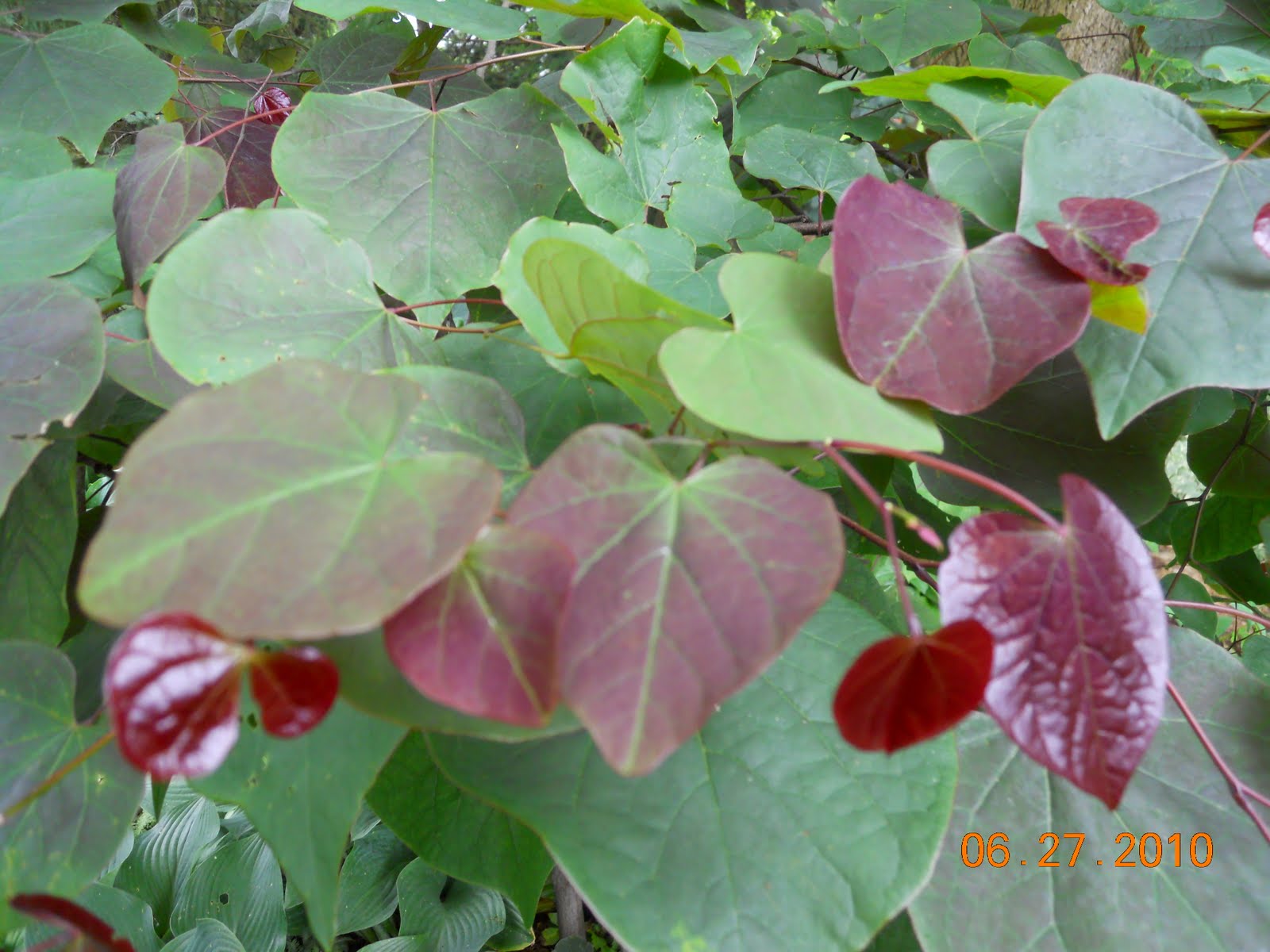
Redbud 'Forest Pansy'


As you might imagine, there is a bit of stigma when you volunteer in the lovely gardens of Cantigny and then you invite people to come to your home garden. The hostess was initially in a bit of a tizzy at the thought of fellow volunteers and staffers coming to her house to critique her personal endeavors. But after a bit of pondering, she righted herself and decided, correctly, that her garden was a reflection of her—both her foibles and strengths are mirrored within her flower beds and borders. But my thought was, “We love her, why wouldn’t we love her garden?”

Acanthus mollis Bear's Britches


Stachys hummelo

Look at that nice color-mirroring in the flower and the stems of the sedum, mmmmm.


Ahhhh..very refreshing!

We all applauded her successes and thought her garden lovely with plentiful shade on a balmy summer day. We had mighty tasty things to eat and a glass of wine, or two. What’s not to like about spending a pleasant afternoon/evening with fellow gardeners/friends under those conditions? Our hostess was relaxed and, as just as she realized, we too should “learn our lessons well” and not stress over whether our container or flower bed designs are “right” or not…think of the lyrics to the above song….

"I learned my lesson well. You see, you can't please everyone, so you got to please yourself."

You truly only have to please yourself when designing. If you’re happy with the colors, the heights, the textures…that’s plenty good enough.


Not only did she grow this cool cardoon plant....

BUT, she's also a good composter too!